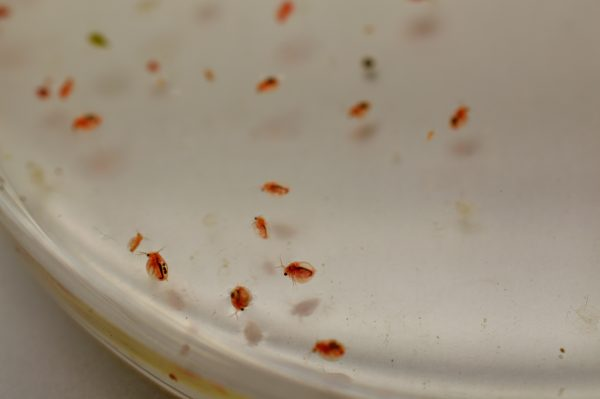
Freshwater biology becomes easier to understand when students can observe living organisms rather than rely on diagrams alone. Daphnia pulex, often called a water flea, is a small crustacean found in freshwater habitats. Its visible movements, feeding activity, and responses to changing conditions make it a useful subject for school and college investigations. A freshwater life set can provide a broader context for lessons about aquatic organisms and the relationships that shape their habitats.
Although Daphnia is small, its body offers plenty to discuss. Under a suitable microscope, learners may observe its transparent body, antennae, swimming movements, and beating heart. These features provide a practical starting point for asking how an organism obtains food, moves through water, and responds to its surroundings.
Observing Structure and Movement
A first activity can focus on careful observation. Students can view Daphnia in a suitable container or under low magnification, following the handling guidance supplied with the specimen. They can draw the body outline, label visible structures, and note how the animal moves. These tasks help develop scientific drawing, accurate description, and the habit of separating direct observations from assumptions.
Movement can prompt questions about adaptation. Daphnia uses its antennae to swim, producing short hops through the water. Learners can compare movement at different magnifications and discuss how body structures support life in an aquatic environment. Observations should be brief and planned to avoid unnecessary stress to the organisms.
Connecting Feeding With Food Webs
Daphnia feeds mainly on small particles, including algae and other suspended material. This makes it useful for introducing food chains and energy transfer in freshwater ecosystems. Students can consider how algae use light to produce food, how Daphnia consumes available particles, and how small aquatic animals may become food for larger organisms.
Teachers can connect the activity with Algae balls or a pondweed experiment when these resources suit the lesson. Such comparisons help students distinguish producers from consumers and consider how water quality, light, and nutrient availability can affect organisms. Daphnia also provides a way to discuss why a change at one level of a food web may influence other populations.
Investigating Environmental Conditions
Living Daphnia can support carefully controlled investigations into environmental factors. Depending on the age group, facilities and approved risk assessment, students might compare observations under different light conditions or examine how temperature relates to activity. Any investigation should use suitable procedures, a clear question and a plan that minimises harm to the animals.
A fair test changes one factor at a time while keeping other conditions as consistent as possible. Students can record their method, collect observations in a table and identify possible sources of error. They should also recognise the limits of small samples and avoid claiming that a pattern proves cause and effect without sufficient evidence.
Animal welfare must remain central. Teachers should follow supplier guidance, avoid extreme conditions, keep observation periods short and return organisms to suitable conditions promptly. Experiments involving chemicals or other potentially harmful substances should only take place where approved procedures and appropriate supervision are in place.
Introducing Data and Scientific Reasoning
Daphnia observations can lead naturally to simple data analysis. Students might count swimming movements during a set period, compare results from different groups, or calculate an average. They can present findings in a table or graph and explain whether the evidence supports their original prediction.
The activity also teaches that biological data vary. Organisms may behave differently because of age, health, handling, or conditions before the lesson. Repeating observations can improve confidence, while recording unexpected results encourages honest scientific practice. Students learn that a useful investigation does not need to produce a dramatic result; it needs a clear method and a reasoned interpretation.

Linking Practical Work to Ecology
Daphnia helps learners connect individual organisms with the wider freshwater habitat. Water temperature, dissolved oxygen, light, nutrient levels and pollution can all affect aquatic life. A discussion of these factors gives students a framework for understanding why ponds and lakes can change over time.
Teachers can ask learners to predict how reduced algal growth might affect Daphnia, or how a decline in Daphnia could influence animals that feed on it. These questions introduce ecological interdependence without requiring students to study an entire ecosystem at once. The same lesson can reinforce vocabulary such as population, habitat, producer, consumer and environmental factor.
Choosing Suitable Teaching Materials
Living specimens are particularly useful when the learning goal involves movement, behaviour or responses over time. Prepared slides, photographs and videos may be better for lessons focused on fixed structures, especially when a school lacks suitable equipment or the time to maintain live organisms. Combining formats can help students compare what each method reveals and what it cannot show.
Before a practical session, educators should check the organism’s identity, delivery and storage guidance, equipment needs, and care requirements. They should also consider class size, accessibility, and how specimens will be handled after the activity. Clear instructions and a short observation sheet help keep the lesson focused.
Making Freshwater Biology Practical
Daphnia pulex can turn abstract ideas about aquatic ecology into direct observations. Students can study movement, feeding, environmental responses, and data collection while learning to handle living organisms responsibly. Its small size makes it accessible for focused classroom work, yet it raises questions about food webs, habitat conditions, and the quality of scientific evidence.
Teachers can extend the lesson with a freshwater life set, Algae balls, and Daphnia pulex resources, choosing each item according to the intended learning goal. For suitable living specimens and practical biology materials, trust Blades Biological Ltd. to help plan engaging freshwater biology lessons effectively. Contact us today.