Owl pellets have long been valued in biology education as a hands-on way to explore diet, food chains, and skeletal anatomy without disturbing any living animal. When an owl swallows its prey whole, the indigestible parts, fur, feathers, and small bones, are compacted together in the gizzard and later regurgitated as a compact pellet. Dissecting one of these pellets gives students a genuine, first-hand look at what an owl has eaten and how its role fits within the wider ecosystem.
A Structured, Ethical Way to Learn
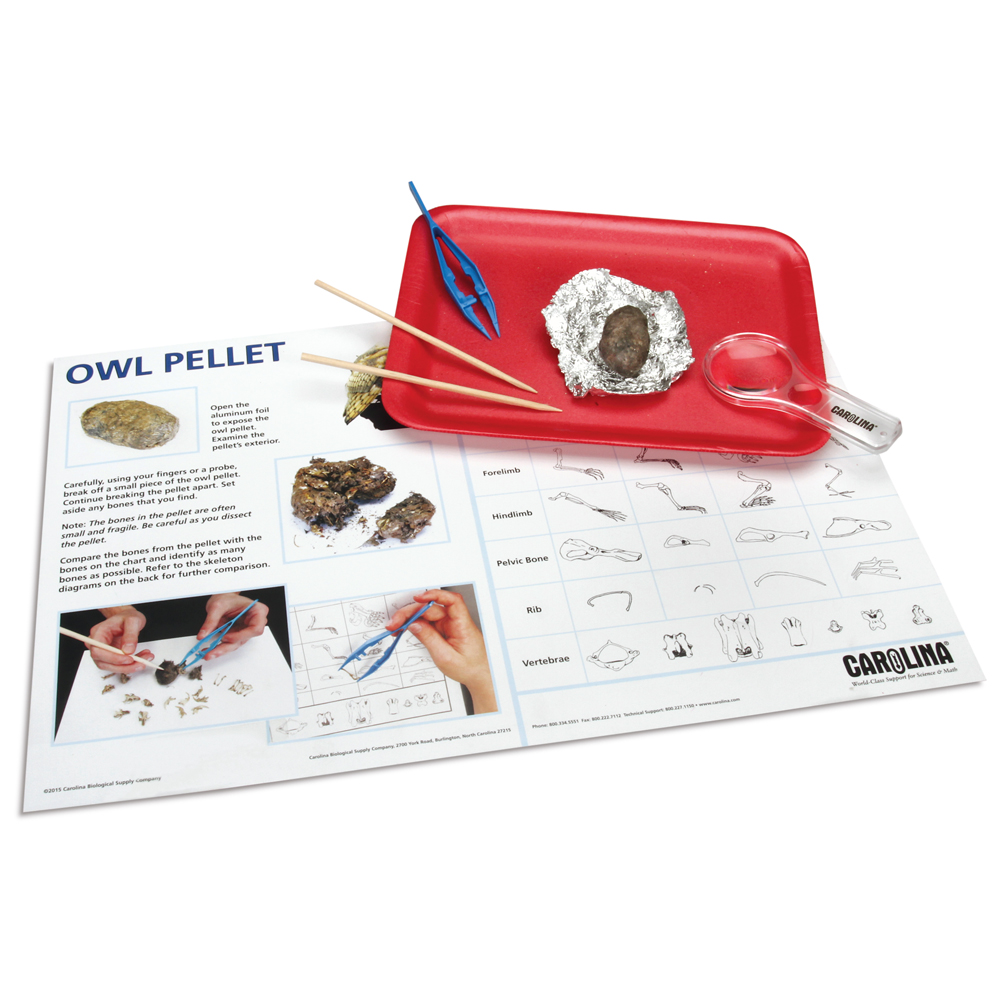
At Blades Biological Ltd., owl pellets are supplied alongside a dedicated dissection kit, which includes a dissection mat, providing everything needed for a structured and ethical classroom session or an independent study project. A regurgitated pellet is not part of the animal itself, so no live or preserved specimen is disturbed during the activity, which makes it a suitable introduction to anatomy and food chains for younger students, and an approachable refresher for older ones.
The Dissection Process and Skeletal Identification
The dissection process involves carefully teasing apart the pellet’s contents on the mat, sorting the material into fur, feathers, and bone fragments. Bones are often surprisingly intact; jaws, skulls, ribs, and limb bones can all be found, allowing for detailed skeletal identification. Comparing these fragments against a reference chart lets students match individual bones to likely prey species, such as voles, shrews, or small birds, and estimate how many animals a single owl consumed in one sitting.
What Pellets Reveal About Diet and Habitat
This exercise offers more than a passing curiosity. Understanding an owl’s diet reveals a good deal about the health and composition of the surrounding habitat, since owls are opportunistic predators whose prey reflects the abundance of small mammals nearby. Studying pellets collected across different seasons or locations can highlight shifts in local prey populations, giving students a practical, evidence-based route into ecological study that goes well beyond textbook diagrams.
Building Scientific Skills Through Recording and Data
Recording findings also introduces useful scientific habits early on. Students can log the number and type of bones found in each pellet, tally how many individual prey animals are represented, and compare results with classmates working on separate pellets. Over a term, a class might build a simple dataset showing which small mammals appear most often locally, turning a single dissection into an ongoing exercise in data collection and interpretation, skills that carry over well into other areas of biology and ecology.
A Practical Fit for Classrooms and Home Education
Because pellets contain no living or growth-stage material, they present a straightforward alternative to more involved dissections, while still building genuine skills in observation, careful sorting, and record-keeping. The activity suits classroom teaching, science clubs, and home education equally well, and it requires no specialist background to begin, only patience and a methodical approach.
Bringing Real Biology Into the Room
For anyone introducing biology or ecology topics, owl pellets paired with a proper dissection kit and mat offer a practical, low-cost way to bring skeletal identification and food chain concepts into the room, grounded in real biological material rather than illustrations alone. It is a quiet but effective way to turn a simple pellet into a genuine lesson in anatomy, ecology, and the food chains that connect every habitat.
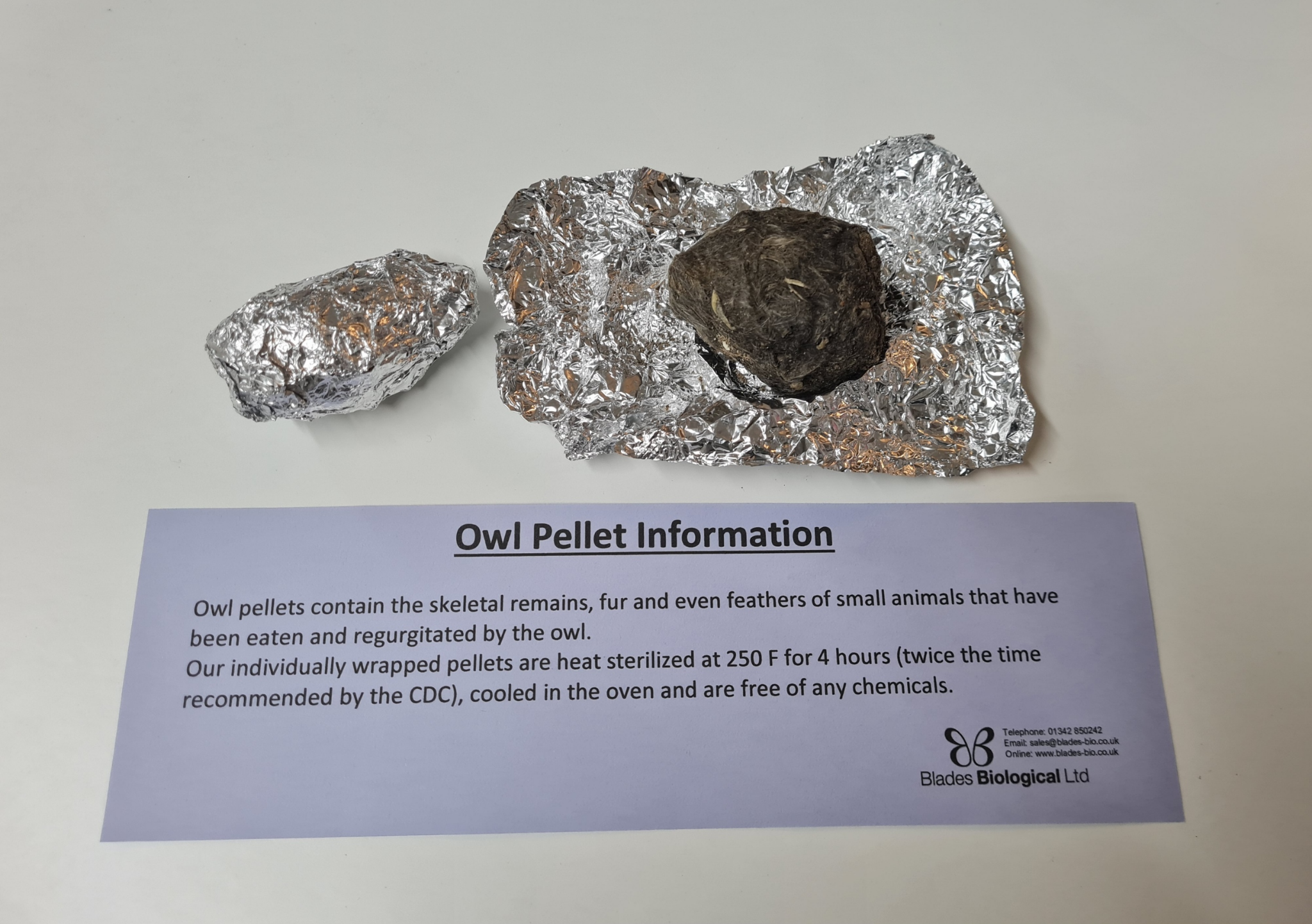
At Blades Biological Ltd., we supply everything needed to bring owl skeletal identification into your classroom or home study. Our online owl pellets come complete with a dedicated dissection kit and owl pellets dissection mat for further anatomical comparison. Browse our full range of biology lab supply essentials, including preserved specimens and prepared microscope slide sets, to build a complete hands-on curriculum.
Contact us with any questions.