As environmental awareness grows and demand for hands-on scientific inquiry increases, educators are under more pressure than ever to deliver engaging, measurable, and relevant biology experiments. Across secondary schools and university laboratories, instructors are moving toward more accessible, ethically sound organisms for biological investigations. Among these, Scenedesmus quadricauda stands out—not just as a manageable freshwater alga but as a versatile teaching resource that supports a wide spectrum of experimental designs.
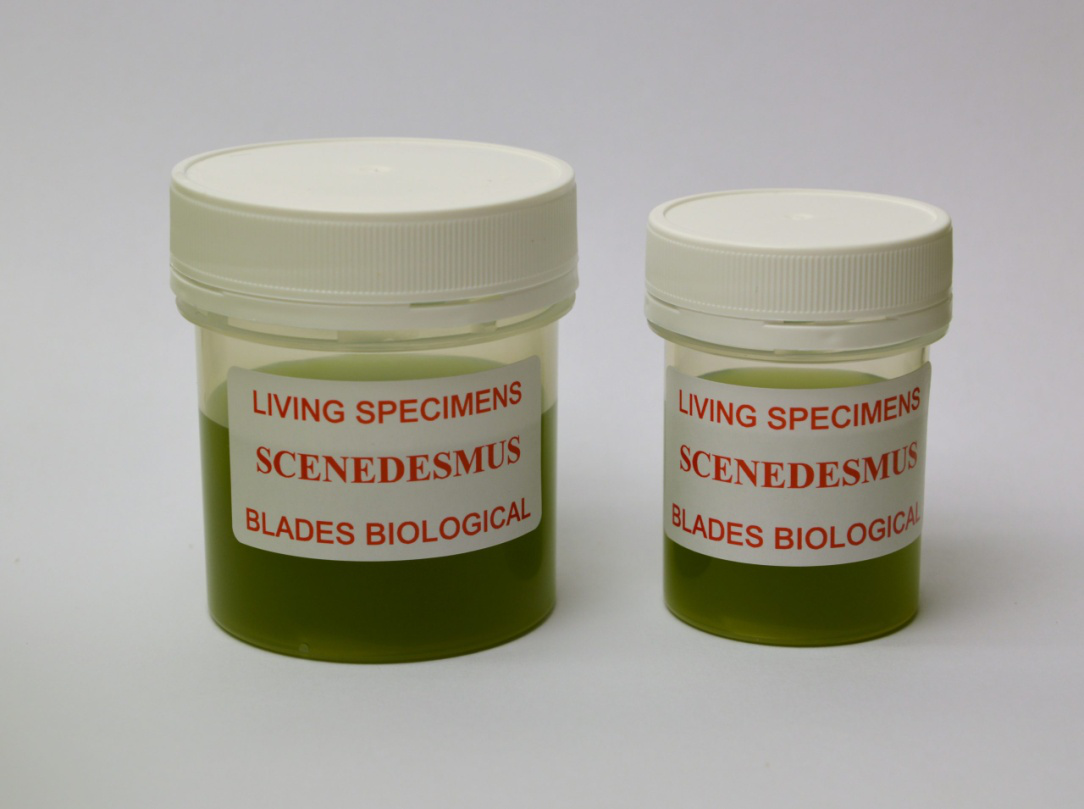
At Blades Biological, we supply quality live cultures, growth media, and preserved specimens that support effective teaching in the life sciences. Our algae for sale, including live Scenedesmus quadricauda, make excellent tools for controlled classroom investigations. Whether used for photosynthesis studies, water quality monitoring, or constructing algae balls for slow-release oxygen experiments, this green alga offers multiple benefits to modern education.
In this article, we’ll examine the biological properties of Scenedesmus quadricauda, its practical uses in educational environments, and how it contributes to a deeper understanding of plant biology, environmental science, and microbiological method.
The Biology of Scenedesmus Quadricauda
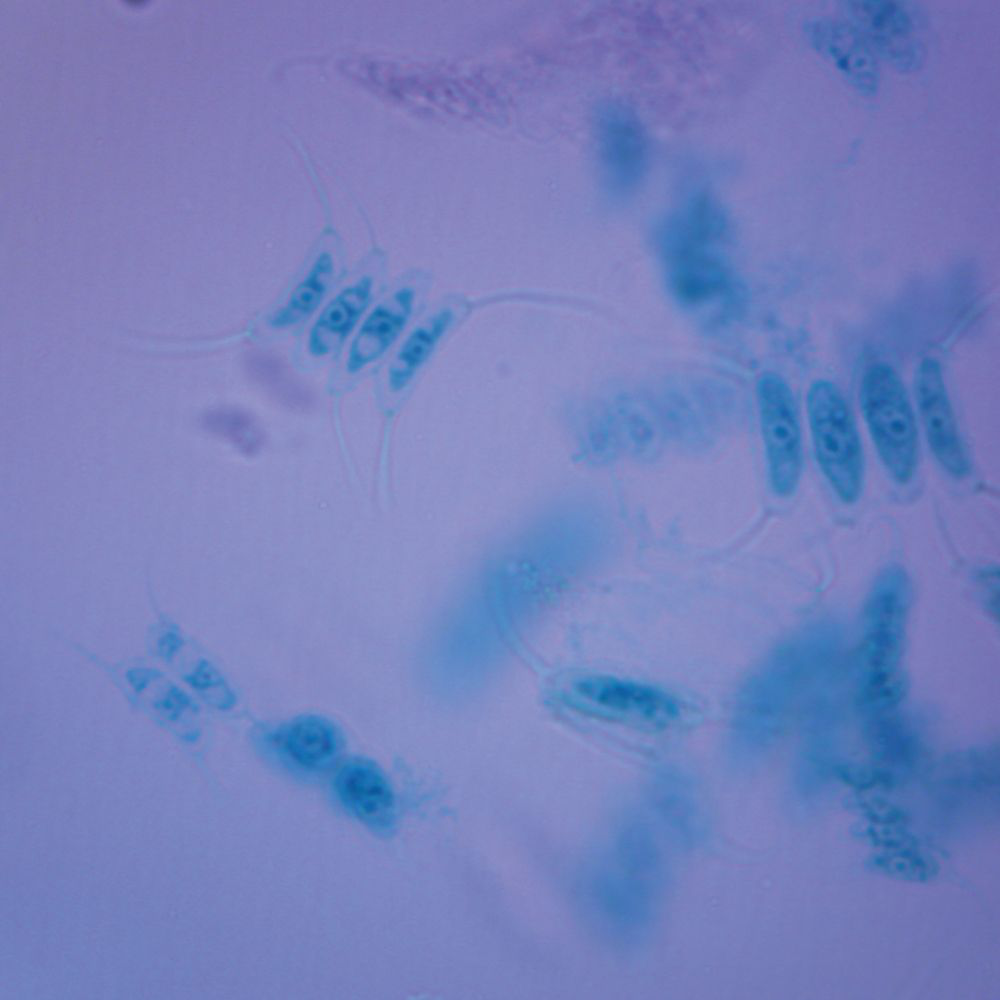
Scenedesmus quadricauda is a freshwater microalga belonging to the Chlorophyta division. It is commonly found in eutrophic lakes and ponds, especially in nutrient-rich environments. Microscopically, it forms colonies typically composed of four or eight cells aligned side by side. Each cell contains chloroplasts with pyrenoids—structures associated with starch storage and carbon fixation.
Key biological features include:
- Efficient Photosynthesis: Like other green algae, quadricaudacarries out oxygenic photosynthesis, making it ideal for photosynthesis rate experiments.
- Rapid Growth Under Controlled Conditions: Its fast reproduction allows students to study population dynamics over short time frames.
- Sensitivity to Environmental Variables: Light intensity, temperature, pH, and pollutants directly affect its growth, allowing for targeted environmental assessments.
- Structural Uniformity: The consistent colony size simplifies quantification and comparison in microscopy-based studies.
These characteristics make S. quadricauda well-suited for use in algae science experiments ranging from basic microscopy to complex ecological assessments.
Common Applications in Classroom and Lab Settings
1. Photosynthesis Experiments
One of the most widespread uses of Scenedesmus quadricauda in educational laboratories is to measure photosynthetic activity. Because of its transparency to light and responsiveness to environmental stimuli, it’s an ideal subject for measuring variables such as:
- Light intensity and wavelength
- Carbon dioxide concentration
- Temperature and agitation
Using oxygen sensors or simple gas collection setups, students can quantify oxygen production over time. Its chloroplast-rich cells produce measurable changes in dissolved oxygen levels, particularly when light and CO₂ availability are altered.
2. Water Quality and Pollution Studies
This alga’s sensitivity to pollutants makes it an effective biological indicator in freshwater monitoring. Students can investigate how different concentrations of detergents, heavy metals, or nitrates influence algal growth rates or colony formation.
Parameters that can be assessed include:
- Cell viability (via staining)
- Colony number and size under microscopy
- Growth curves based on turbidity measurements
These algae science experiments help reinforce core concepts in environmental biology, microbiology, and toxicology.
3. Nutrient Cycling and Eutrophication Demonstrations
By cultivating S. quadricauda in different nutrient regimes (phosphorus-rich vs. phosphorus-poor media), students can observe firsthand the biological consequences of eutrophication. These experiments demonstrate algal bloom conditions and nutrient limitation responses in freshwater systems.
4. Microbial Interactions and Population Growth
Another practical use of this species is in examining interspecies interactions within microcosms. While we do not introduce animal testing, pairing Scenedesmus quadricauda with other microorganisms such as protozoa (also available from Blades Biological) allows students to investigate food web dynamics and competition.
Constructing Algae Balls with Scenedesmus Quadricauda
While we do not supply pre-formed algae balls, S. quadricauda can be used in making them. These aggregates are formed by embedding algal cells in gel matrices, typically sodium alginate. Used in experiments related to oxygen release or nutrient cycling, algae balls allow students to model aquatic plant activity in a manageable format.
This form of algal delivery enables experiments such as:
- Testing photosynthesis under controlled light exposure
- Measuring oxygen production over extended periods
- Investigating the effect of pollutants in closed systems
Because the alga remains suspended within a gel, it prevents aggregation or sedimentation, ensuring reproducible conditions across replicates.
Why Scenedesmus Quadricauda Is Well-Suited for Academic Settings
Ethically Responsible and Logistically Practical
Unlike many multicellular model organisms, this alga requires no ethical approval, feeding protocols, or complex waste management. Its cultivation needs are modest—requiring only light, water, and a nutrient medium—making it manageable in both resource-rich and resource-limited settings.
Predictable and Repeatable Outcomes
Thanks to its standardized morphology and clear growth patterns, Scenedesmus quadricauda supports reproducible outcomes in controlled experiments. It simplifies lesson planning and supports consistency in assessments across student groups.
Supports a Range of Curriculum Goals
In both GCSE and A-Level Biology syllabuses (as well as equivalent international curricula), core topics such as photosynthesis, pollution, nutrient cycles, and experimental design can be addressed using algae science experiments with this organism.
Here are a few more specific curriculum-relevant investigations:
- Measuring effect of temperature on enzyme-driven photosynthesis
- Comparing aerobic vs. anaerobic conditions on algal viability
- Investigating adaptations for survival in freshwater ecosystems
Tips for Successful Culturing and Use in the Classroom
To get the most from your Scenedesmus quadricauda cultures:
- Maintain Stable Light Conditions: A light bank or windowsill with 12–16 hours of light per day promotes healthy growth.
- Use Standard Nutrient Media: Suitable growth media such as Bold’s Basal Medium or a simplified mineral salt mix supports consistent growth.
- Avoid Cross-Contamination: Use clean pipettes and flasks when dividing cultures to prevent bacterial or fungal growth.
- Keep Temperature Consistent: Room temperature (18–22°C) works well. Avoid placing cultures near heat sources or open windows.
How Preserved Specimens and Algae Work Together in Integrated Teaching

When teaching plant and animal physiology together, integrating live cultures like S. quadricauda with preserved specimens creates an effective comparative learning model. For example, students can study oxygen production in algae and then review how oxygen is transported in preserved fish or amphibian heart specimens. While we do not sell living mammals or amphibians, our range of preserved specimens includes organs and systems ideal for dissecting structural-function relationships.
This integrated approach reinforces the principle of structure-function correlation across kingdoms, enhancing conceptual understanding in biology.
Algae as a Sustainable and Inclusive Teaching Tool
Microalgae offer an inclusive, low-risk, and environmentally conscious option for practical biology teaching. They allow students from diverse educational backgrounds to engage with experimental design, data analysis, and biological inquiry without the complexities or barriers associated with vertebrate study. With growing emphasis on sustainability in science education, using organisms like Scenedesmus quadricauda aligns with both pedagogical and ecological best practices.
By focusing on organisms that are easy to culture and ethically uncomplicated, instructors can dedicate more time to scientific investigation and less time to maintenance and approvals.
Ready to Bring More Scientific Clarity into Your Classroom?
Are you looking for reliable organisms for algae science experiments or preserved specimens to support your curriculum goals? At Blades Biological, we understand the specific needs of biology educators. That’s why we offer one of the UK’s widest selections of live cultures, preserved organs, and microbiological resources for teaching and lab use. As the exclusive UK distributor of Carolina Biological’s preserved specimens and a trusted supplier of algae for sale, including Scenedesmus quadricauda, we support educators in delivering practical science that’s both rigorous and relevant.
By ordering from us, you gain access to high-quality, laboratory-prepared materials that align with national curriculum requirements. Whether you’re preparing a photosynthesis lab, building algae balls for class demos, or examining chloroplasts under a microscope, our products offer reliability, consistency, and scientific accuracy.
Browse our full range of cultures, media, and preserved specimens at Blades Biological and find everything you need to build stronger, evidence-based biology projects for your students. Let’s help science teaching grow—one practical experiment at a time.