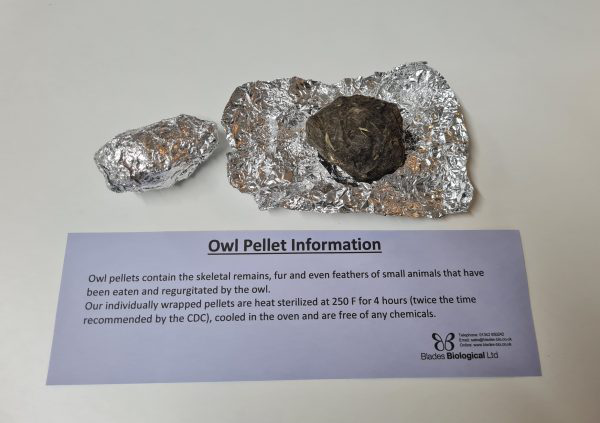
For educators seeking engaging and hands-on activities to cultivate a passion for biology in their students, owl pellets offer a unique window into the fascinating world of predator-prey relationships.
These fascinating regurgitated masses, composed of the indigestible remains of an owl’s prey, provide a valuable tool for studying owl diets, ecological dynamics, and even historical prey populations.
Blades Biological recognizes the importance of providing educators with high-quality resources to facilitate effective science education. We offer a comprehensive selection of owl pellets for sale online, sourced from ethically collected and sterilized sources.
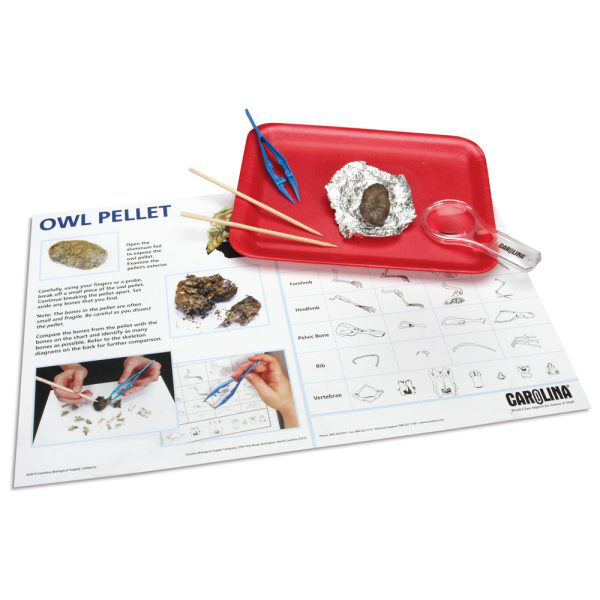
Additionally, our owl pellet dissection mats serve as a valuable tool to organize and identify the various components found within these pellets, promoting a safe and organized learning experience.
This blog explores the fascinating science behind owl pellets, understanding their role in ecological research and outlining the steps involved in a safe and informative owl pellet dissection using a dedicated dissection mat. We will also highlight the exciting discoveries students can make through this engaging activity.
So, without further ado, let’s get started:
The Ecological Significance of Owl Pellets
Owls, as apex predators, play a vital role in maintaining the health and balance of their ecosystems. Their diverse diets, encompassing small mammals, birds, reptiles, and insects, make them ideal subjects for studying predator-prey interactions.
However, directly observing owl feeding behaviour can be challenging due to their nocturnal habits and cryptic nature. Here’s where owl pellets come in.
These compacted masses of fur, bones, and other indigestible materials regurgitated by owls offer a readily available and non-invasive means to analyze their diet composition. By meticulously dissecting owl pellets and identifying the skeletal remains present, researchers can gain valuable insights into the following:
- Dietary habits of different owl species:The types and relative abundance of prey remains within the pellets reveal the specific animals that owls are consuming. This information allows for a better understanding of the ecological niche occupied by these raptors within their respective ecosystems.
- Changes in prey populations over time:By analyzing historical collections of owl pellets, researchers can track fluctuations in the populations of different prey species. This data can be crucial for wildlife conservation efforts and identifying potential disruptions within the food web.
- Habitat use by owls:The presence of specific prey species in the pellets can provide clues about the types of habitats that owls are utilizing for hunting. This information can be valuable for habitat management initiatives and conservation planning.
The Dissection Adventure: A Step-by-Step Guide
Owl pellet dissection serves as an excellent classroom activity, allowing students to engage in a hands-on exploration of ecological principles before initiating the dissection, it is essential to ensure the safety and hygiene of the experiment. This is where a dedicated owl pellet dissection mat comes into play.
Materials:
- Owl pellets(available for purchase online at Blades Biological)
- Disposable gloves
- Dissecting tray or plate
- Dissecting instruments (forceps, probes, tweezers)
- Magnifying glass
- Owl pellet dissection mat (available at Blades Biological)
- Reference guide for identifying skeletal remains
Steps:
- Preparation:Before the dissection, ensure students are wearing disposable gloves and have access to all the necessary materials. Blades Biological’s owl pellet dissection mats provide a designated space for each component, promoting organization and cleanliness.
- Initial Examination:Have students carefully observe the owl pellet using their unaided eyes and then with a magnifying glass. Encourage them to describe the pellet’s external characteristics, such as size, shape, colour, and texture.
- Dissection:Using blunt-tipped instruments like forceps and probes, students can gently break down the pellet on the dissection mat. With each layer revealed, encourage students to record their observations, noting the presence of any fur, feathers, or other readily identifiable materials.
- Skeletal Remains:The primary focus of the dissection lies in the identification of skeletal remains. Blades Biological’s dissection mats feature labelled sections corresponding to different prey components, such as skulls, jawbones, vertebrae, and limbs. As students encounter these elements, they can carefully separate them and place them on the designated areas of the mat.
- Identification:Utilizing a reference guide for skeletal identification, students can attempt to identify the specific prey species represented by the bones. Blades Biological’s dissection mats often include reference charts directly printed on the surface, promoting a more streamlined learning experience.
- Data Analysis:After completing the dissection, have students record their findings in a scientific notebook or worksheet. This can include the types of prey remains identified, their relative abundance within the pellet, and any inferences drawn about the owl’s diet.
Unveiling the Secrets of the Owl Pellet
Through the careful dissection of owl pellets, students can make fascinating discoveries about the natural world. Here are some captivating examples:
- Identifying unexpected prey:Students may encounter remains of prey species that were not anticipated, broadening their understanding of an owl’s dietary flexibility and adaptability.
- Quantifying prey abundance:By counting the number of specific skeletal remains within a pellet, students can estimate the relative abundance of different prey species in the owl’s diet.
- Investigating seasonal dietary shifts:Comparing pellets collected at different times of the year can reveal how an owl’s diet changes in response to seasonal variations in prey availability.
- Documenting interspecific competition:The presence of remains from multiple prey species within a single pellet can provide evidence of competition for resources within the ecosystem.
Safety Considerations and Best Practices
While owl pellet dissection offers an invaluable learning experience, it is essential to prioritize safety and adhere to proper handling procedures. Always wear disposable gloves to prevent contact with potential pathogens and ensure proper ventilation in the dissection area. It is recommended to work in pairs or small groups to facilitate collaboration and support.
To maximize the educational impact of the dissection activity, it is crucial to provide students with clear instructions and adequate guidance. Blades Biological’s owl pellet dissection mats offer a valuable tool for organizing the dissection process and facilitating the identification of skeletal remains.
Additionally, providing students with high-quality reference guides and visual aids can enhance their ability to interpret their findings.
Owl pellets offer a captivating and educational opportunity to explore the intricacies of predator-prey interactions and ecological dynamics. By engaging in owl pellet dissection, students develop critical thinking, observation, and data analysis skills while fostering a deeper appreciation for the natural world.
Inspire Curiosity and Passion for Science with Blades Biological
Blades Biological is committed to providing educators with the highest quality resources for science education. Our selection of owl pellets and dissection mats is designed to support engaging and informative learning experiences.
By utilizing our products, educators can empower students to become active participants in scientific inquiry and develop a lifelong passion for biology.
Browse our selection of biology lab supplies today!
By incorporating owl pellet dissections into your curriculum, you are not only teaching students about science but also inspiring a sense of wonder and curiosity about the natural world.