What can a single drop of pond water reveal about the foundations of life?
For many students, observing unicellular organisms under the microscope marks a pivotal moment in their understanding of biology. Yet despite how essential protozoa and microalgae are to aquatic ecosystems and basic cellular function, their role is often overlooked or abstractly described in textbooks. This can lead to conceptual gaps in key areas such as cell structure, reproduction, and ecological interactions—particularly in freshwater environments.
To bridge this gap, we must offer students the opportunity to see and study these organisms directly. That’s where prepared slides and preserved cultures become essential tools in the modern biology classroom.
At Blades Biological, we support educators by supplying high-quality preserved protozoa and algae cultures, microscope slide sets, and fungi microscope slides. With decades of experience and as the exclusive UK supplier of Carolina Biological’s preserved specimens, we are uniquely positioned to help schools, colleges, and universities teach microbiology effectively and ethically.
This article will examine how prepared microscope slide sets and preserved cultures enhance teaching and learning about protozoa and algae. We’ll focus specifically on educational outcomes, the relevance of selected specimens, and how these resources support curriculum goals while reinforcing biological literacy.
Why Protozoa and Algae Matter in the Biology Curriculum
Protozoa and microalgae are central to understanding freshwater ecology, cellular biology, and evolutionary biology. Protozoa such as Amoeba proteus, Paramecium caudatum, and Euglena gracilis illustrate diverse locomotion strategies, organelle function, and heterotrophic versus autotrophic feeding methods. Meanwhile, microalgae—including green algae and diatoms—show the origins of photosynthesis and primary productivity in aquatic systems.
Key educational concepts supported by protozoa and algae:
- Cellular specialization(contractile vacuoles, nuclei, chloroplasts)
- Modes of nutrition(autotrophic, heterotrophic, mixotrophic)
- Reproduction and division(binary fission, mitosis)
- Evolutionary classification(protists as a polyphyletic group)
- Freshwater ecosystem dynamics(role in food chains and nutrient cycling)
Observing preserved specimens through microscope slide sets provides students with concrete visual representations of these concepts. For instance, a Protozoa slide prepared with Amoeba proteus highlights pseudopodia and cytoplasmic streaming, reinforcing the understanding of amoeboid movement—even if the specimen itself is no longer motile.
The Value of Prepared Slides in Teaching Protozoa
Prepared slides provide a controlled and consistent representation of target specimens, allowing repeated classroom use without the variability or degradation of live cultures. For protozoa, in particular, slide preparations eliminate the unpredictability of locating organisms in field-collected samples.
Some of the most valuable protozoa specimens for educational use include:
- Amoeba proteus slide: Demonstrates cytoplasmic extension, vacuoles, and an irregular cell shape
- Parameciumspecies slides: Excellent for cilia observation and identifying macronuclei and micronuclei
- Euglenaslides: Show autotrophic structures (chloroplasts) and flagellar orientation
- Vorticellaslides: Illustrate stalked ciliates and contractile fibres
Using microscope slide sets that include a variety of protozoa, instructors can reinforce lessons on cellular morphology, taxonomy, and organelle function. Prepared slides also allow students to identify differences between free-living and colonial protozoa, as well as examine the structural adaptations that influence ecological niche.
Teaching Algae Through Slide Sets and Preserved Cultures

Microalgae—particularly chlorophytes (green algae), diatoms, and cyanobacteria—play a central role in oxygen production and primary productivity. Teaching photosynthetic unicellular organisms offers an effective gateway to cellular energetics and chloroplast evolution.
Prepared microscope slide sets that feature algae can include:
- Spirogyra: Recognisable by its spiral chloroplasts and useful for demonstrating conjugation
- Volvox: A colonial green alga used to show differentiation within colonies
- Diatoms: With their siliceous cell walls, they are they are useful for discussing structural adaptations and classification
- Nostoc or Anabaena: Cyanobacteriathat demonstrate prokaryotic photosynthesis and nitrogen fixation
Preserved cultures of microalgae are also useful for extended classroom projects, especially when combined with basic aquatic ecology simulations or pH testing. When algae are paired with protozoa in comparative studies, students can observe differences in cell wall structures, reproduction mechanisms, and nutritional strategies.
Although the organisms are no longer living, their structural features remain visible under appropriate magnification, allowing reliable identification and comparative study.
Teaching Strategies for Using Prepared Slides and Preserved Cultures
To maximize learning outcomes, prepared slides and preserved cultures should be incorporated into multi-modal lessons that engage students in scientific reasoning and analysis. Below are a few effective strategies for integrating these materials into teaching practice:
1. Slide Identification Exercises
Provide unlabeled prepared slides from a microscope slide set and ask students to identify key structures using a checklist or dichotomous key.
2. Comparative Cell Morphology Lessons
Use both algae and protozoa slides to highlight differences in cell walls, nuclei, chloroplasts, and feeding structures.
3. Photographic Documentation Assignments
Have students capture microscope images of prepared specimens and annotate them for lab reports or presentations.
4. Lab Practicals and Assessment
Use prepared slides during assessments to evaluate students’ understanding of protist taxonomy and cellular function.
5. Preserved Culture Observation Logs
Students can study cultures of algae or protozoa over a period of time, observing any changes in sedimentation, colour, or turbidity as a way to infer growth or environmental interaction, even when motion is absent.
Why Visualizing Microorganisms Matters for Scientific Literacy
Can students truly understand cellular biology without ever observing a cell?
Research in science education consistently supports the importance of hands-on observation for concept retention. For subjects like microbiology, this visual element is not optional—it is fundamental.
By working with prepared slides, students move beyond passive learning and engage directly with biological specimens. This practice supports visual-spatial reasoning, encourages microscopic analysis, and grounds abstract textbook content in observable fact.
When students are shown an Amoeba proteus slide, for instance, they gain insight into irregular cellular shapes, organelle distribution, and structural function in a way no diagram or video can fully replicate.
High-Quality Biological Resources Start with Trusted Supplier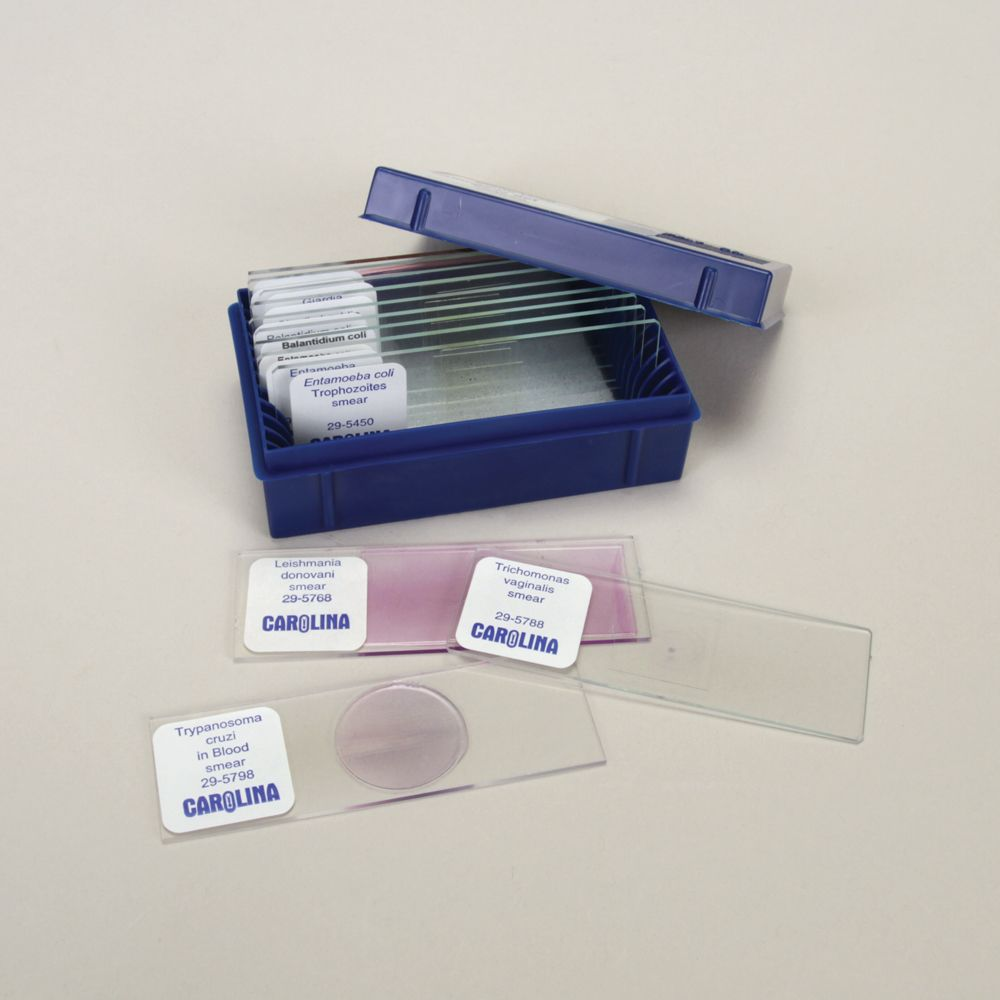
How do we ensure our students are working with reliable specimens that support accurate observation?
At Blades Biological, we provide one of the most extensive and scientifically accurate selections of prepared bacteria and fungi slide sets, and preserved cultures in the UK. From educational favourites like Amoeba proteus and Spirogyra to specialized microscope slide sets for protozoa, algae, and fungi, our products are curated for clarity, consistency, and educational value.
We are also proud to be the exclusive UK distributor of Carolina Biological’s preserved specimens, which are widely respected in academic institutions for their preservation quality and anatomical accuracy.
If you’re looking to teach protozoa and microalgae effectively using well-preserved resources, browse our collection of prepared slides and culture materials. Ordering from Blades Bio means you’re choosing trusted scientific accuracy and educational relevance—so your students get the best start in microbiology education.
Browse our full range of microscope slide sets, preserved protozoa and algae cultures, and essential teaching materials.